
Systems
Marine cooling system service and overheating diagnosis
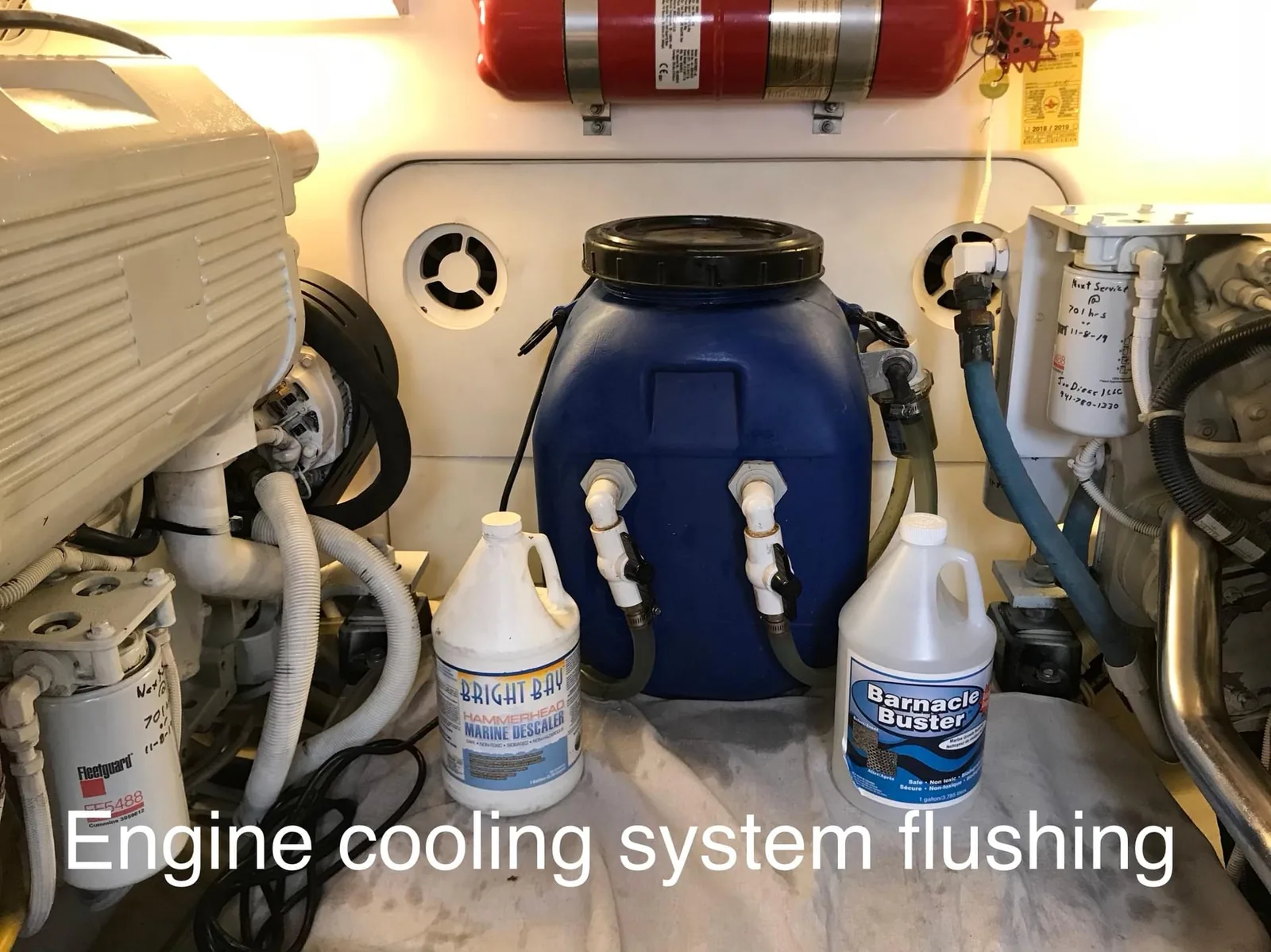
Most marine diesel overheating traces back to the cooling system rather than the engine itself. I service and flush both the raw water and closed loop circuits, replace impellers and thermostats, and find the restriction causing a temperature climb. Salt water is relentless on these circuits and they need attention on a schedule.
Salt water is eating the cooling circuit continuously
Raw water carries salt, sand and marine growth through the whole cooling circuit every hour the engine runs. Heat exchangers silt up, impeller blades harden and shed, and passages scale. An engine that has crept from 180 to 195 degrees over two seasons is telling you this is happening.
What is included
- Raw water circuit inspection from strainer to exhaust
- Impeller replacement and inspection for shed blades
- Heat exchanger and aftercooler flushing
- Closed loop coolant service and pressure test
- Thermostat testing and replacement
- Zinc anode inspection and replacement
- Overheating diagnosis under load
How it works
Trace the circuit
Strainer, pump, heat exchanger, aftercooler, thermostat, exhaust. The restriction is somewhere in that chain and it gets found rather than guessed at.
Flush and replace
Circuits get flushed, impeller and thermostat replaced, anodes checked. Shed impeller blades get hunted down, because they lodge downstream and cause the next overheat.
Verify under load
Temperature is confirmed running under load. An engine that runs cool at the dock proves nothing.
When a marine raw water impeller fails, the shed blades travel downstream and lodge in the heat exchanger, so a correct repair includes locating the missing blade fragments rather than only replacing the impeller.
Related systems work
Marine Generator Service
Service, repair and load testing for marine generators, the system that keeps air conditioning and power alive at anchor.
Marine Transmission Service
Gearbox service, fluid analysis, coupling and alignment work on marine transmissions and drive systems.
Heat Exchanger Service
Cleaning, pressure testing and repair of heat exchangers, aftercoolers and oil coolers fouled by salt water.
Cooling System Service: common questions
How often should the raw water impeller be replaced?
Annually as a default, or at the manufacturer hour interval if it comes sooner. Impellers harden with age and heat even on a boat that has barely run.
My engine runs slightly hotter than it used to. Is that a problem?
Yes, treat it as an early warning. A gradual climb almost always means a restriction building somewhere in the raw water circuit, and it is far cheaper to flush than to repair the damage from an actual overheat.
What are the zincs for?
Sacrificial anodes corrode in place of the heat exchanger and cooler internals. When they are gone the salt water starts on the expensive metal instead, so they get checked as part of cooling service.
Tell me what the engine is doing
Describe the symptom on the phone and most of the time the problem is narrowed before I arrive. Surveys are booked around your sea trial date.